Home/Solutions/Solution Details/
Catalog
Background
System construction
System design
Function introduction
Related Products
Application Cases
Catalog
Catalog

City-Level Smart Parking Management Service Platform Solution

Overview

Aiming to 'serve public parking, serve industry development, and serve government regulation', by building a 'city-level smart parking platform', we will gradually improve the efficiency of parking resource use, increase effective facility supply, assist order governance, and actively expand the whole-industry-chain business of transportation investment, construction, and operation management.

Background

Aiming to 'serve public parking, serve industry development, and serve government regulation', by building a 'static transportation investment and operation platform', we will gradually improve the efficiency of parking resource use, increase effective facility supply, assist order governance, and actively expand the whole-industry-chain business system of static transportation investment, construction, and operation management.

1. Build an urban transportation big data platform

Through parking big data, on the one hand, guide the planning and construction of on-street parking spaces and off-street parking lots; on the other hand, analyze the temporal patterns of vehicles entering and leaving urban areas to assist road traffic planning.

2. Improve citizens' parking happiness and satisfaction

There are spaces to park for entertainment, shopping, business, and other trips; reasonable charging; parking space guidance; humanization and intelligence; frictionless parking experience; mobile payment.

3. Policy objectives

① No abandoned vehicles

② No illegal parking

③ Shift curbside vehicles to parking lots

④ Short stays, quick departures

⑤ Frictionless parking

⑥ Frictionless payment

4. Urban pain points

① Citizen parking

Many abandoned vehicles at curbside cause low turnover of parking spaces around business districts, hospitals, and colleges; plus insufficient construction of guidance signs for vacant spaces, resulting in low parking happiness and satisfaction in the city;

② Parking management

Insufficient civic awareness of civilized parking, imperfect parking management systems, inadequate enforcement of illegal parking, insufficient parking management personnel, etc., directly lead to many difficulties in urban parking management;

③ Parking operations

Low intelligence of parking management, high parking management costs, imperfect arrears collection systems, etc., make urban parking operations difficult, often unable to make ends meet and unsustainable;

④ Parking data silos

Business-district parking lots, private parking lots, public parking lots, roadside parking spaces, etc. cannot uniformly share data with the city platform, making it difficult to realize the value of parking data.
System construction

1. Technology integration of the system

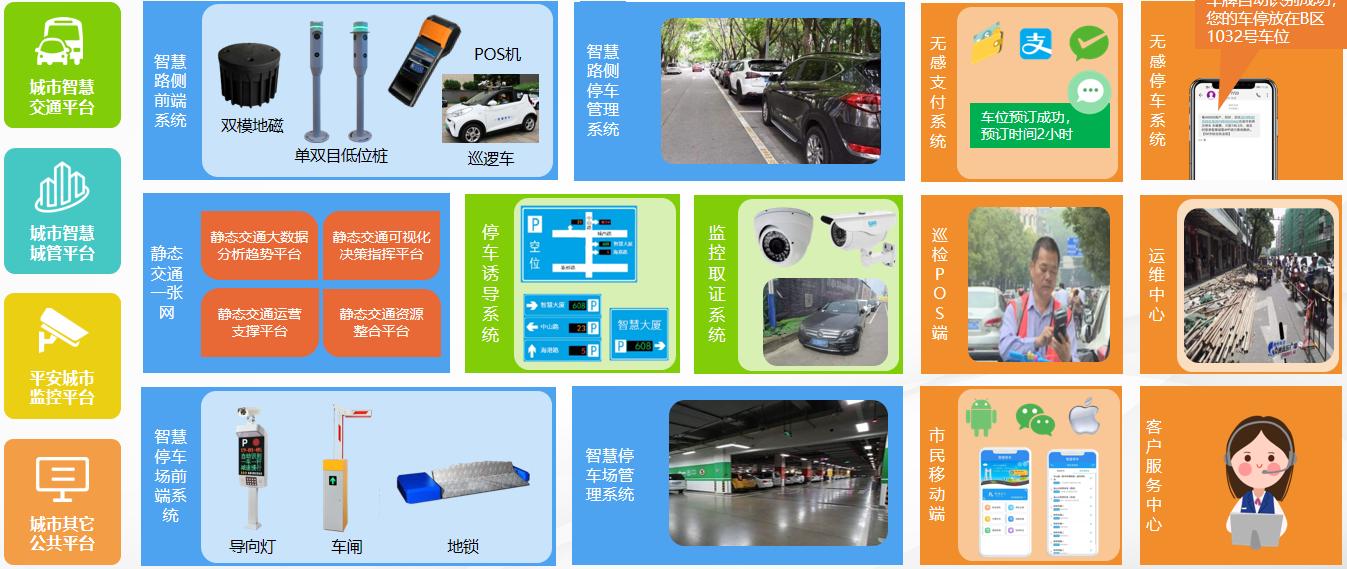
① IoT+: compatible with multiple IoT communication protocols and smart parking devices;

② AI+: video-based license plate recognition and AI algorithms for parking behavior;

③ Cloud computing+: many parking applications share computing and storage resources;

④ Big data+: centralized analysis of roadside parking data and parking lot data.

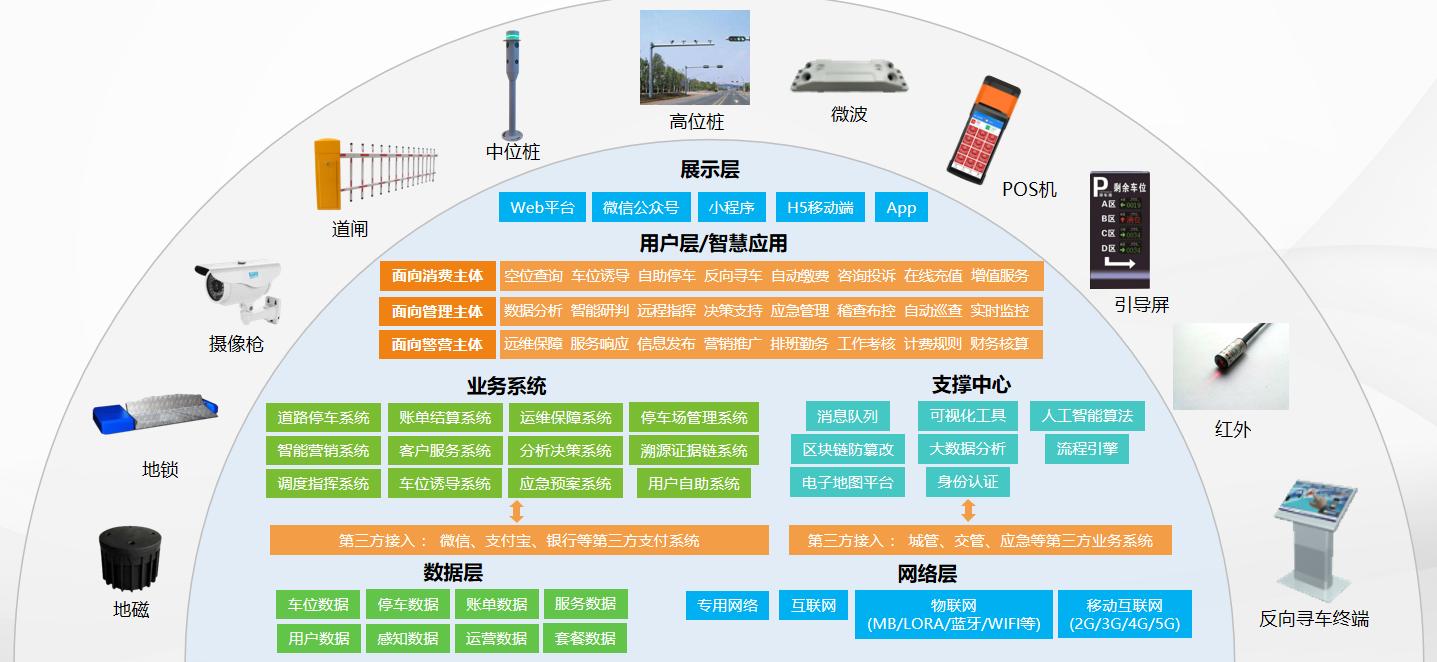
2 System panorama

1673926484_1.jpg

3. Construction and operation approach

① Appropriate technology

Market applications prove that different road sections in cities require different detection technologies and terminals; a single product cannot cover all road sections. At present, geomagnetic sensors have been tested by market operations and are the most widely used. Alternative technologies include geomagnetic + patrol vehicles, medium/low-position monocular and binocular video posts, and high-position bullet/PTZ video posts;

② Dual drive of systems and technology

Multiple parking operation management systems should be formulated and strictly implemented under technical support;

③ Collaborative management is the key

Urban management, transportation, vehicle management offices, municipal administration, development and reform, urban construction, etc., should jointly build;

④ Operations require a complete team

Operations team, customer service team, inspection team, software technology team, equipment maintenance team;

⑤ Collaborative operation management

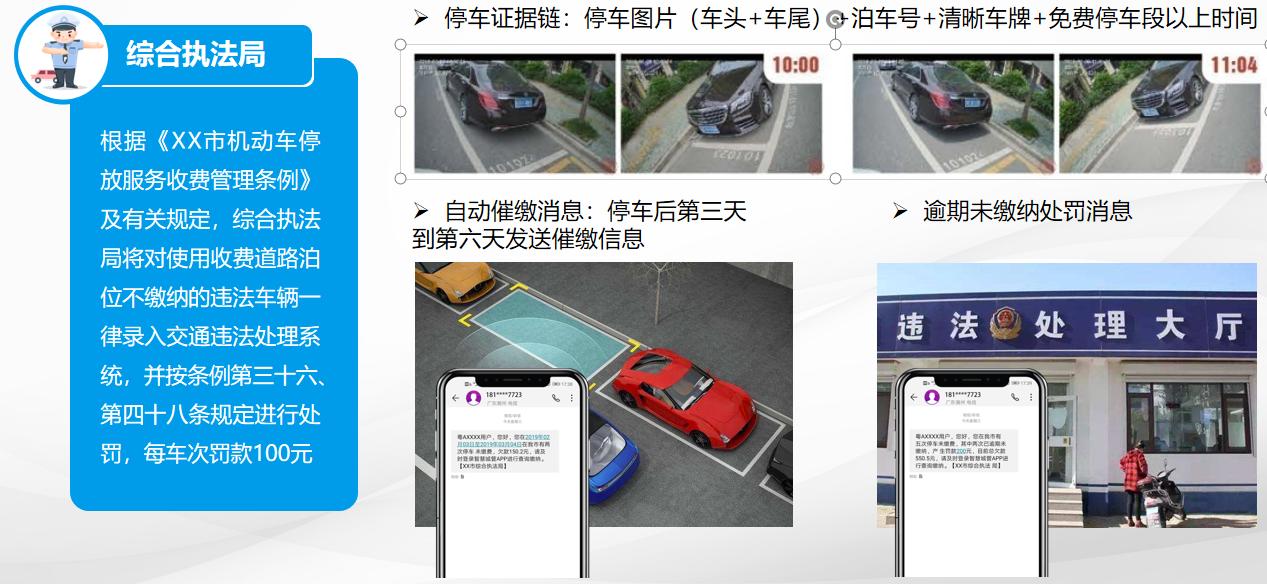
Smart city construction requires the correct leadership of party committees and governments, strong support and coordination from public security traffic police and urban management comprehensive law enforcement departments to jointly solve urban parking management problems.

1673926541_2.jpg

Business model

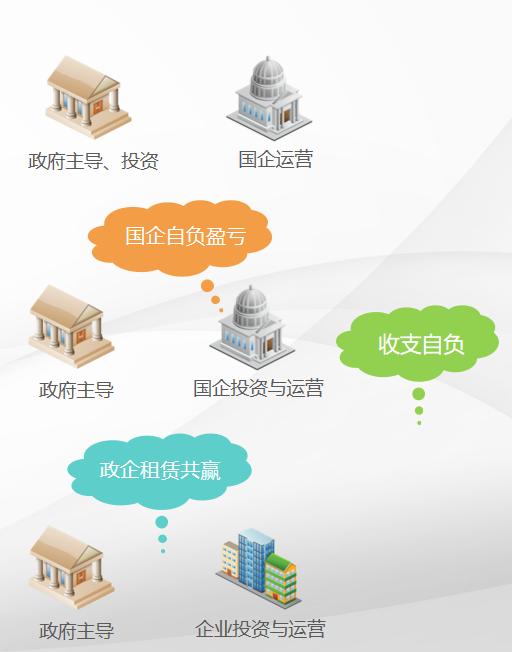
① Government-led, government-invested, state-owned enterprise operated, self-financing

The government invests in smart parking hardware and software; state-owned enterprises under the government set up operation teams; revenues are handled according to relevant regulations;

② Government-led, state-owned enterprise investment and operation, state-owned enterprise assumes profits and losses

State-owned enterprises under the government build with full funding and operate independently; operations can purchase services or be directly transferred, and data reports are submitted to the government;

③ Government-led, enterprise investment and operation, innovative leasing for win-win

Fully funded by private or state-owned enterprises; the government purchases services by leasing; the operator can be a state-owned enterprise under the government or the investing enterprise;

1673926834_5.jpg

Expected application value

① Urban value

Standardize parking and improve city appearance; traffic order is greatly improved, illegal parking is greatly reduced, abandoned vehicles disappear, the turnover rate of on-street parking spaces increases significantly, and the utilization rate of public parking resources is greatly improved;

② Government value

A smart city demonstration project; a new government management innovation model that realizes 'parking in place, standardized charging, separation of people and money, penalties for illegal parking', curbing chaos and alleviating congestion, standardizing traffic order, and is of great significance to the development of smart cities and smart transportation;

③ Value to operating units

Intelligent management of on-street parking spaces enables unmanned and off-site enforcement of illegal parking; through big data analysis and actual surveys, parking lots and on-street parking spaces are scientifically set and laid out;

④ Citizen value

Travel is more convenient; through mobile phones, citizens can check vacant spaces at target locations and plan optimal travel routes; frictionless parking and payment simplify the parking process and greatly enhance user experience.

System design

Front-end parking system

① Geomagnetic + POS + surveillance evidence collection

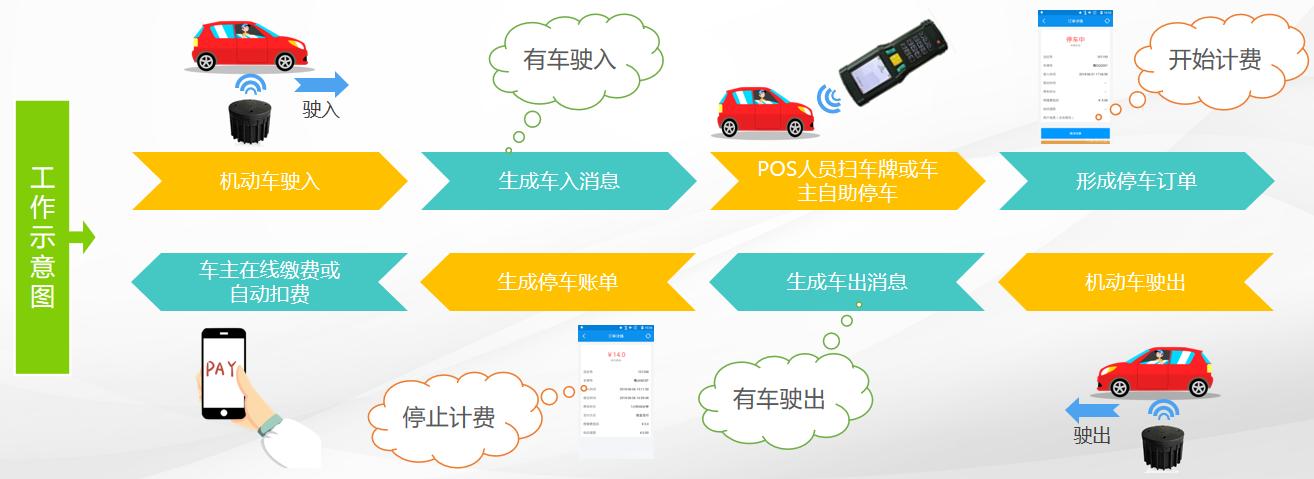
Geomagnetic sensors are installed in parking spaces. When vehicles enter or exit, the geomagnetic equipment uses its geomagnetic and microwave detection algorithms to intelligently determine space vacancy status and sends data via the NB-IoT carrier network to the smart parking cloud platform and inspectors' POS devices. After inspectors respond, they perform license plate recognition and photograph evidence. Surveillance video is used to retain the complete parking process for traceability and evidence collection. Disadvantages: geomagnetic operation may be affected by high magnetic objects, transformer stations, water immersion, etc., causing recognition errors and requiring timely response and handling by POS personnel.

1673926868_6.jpg

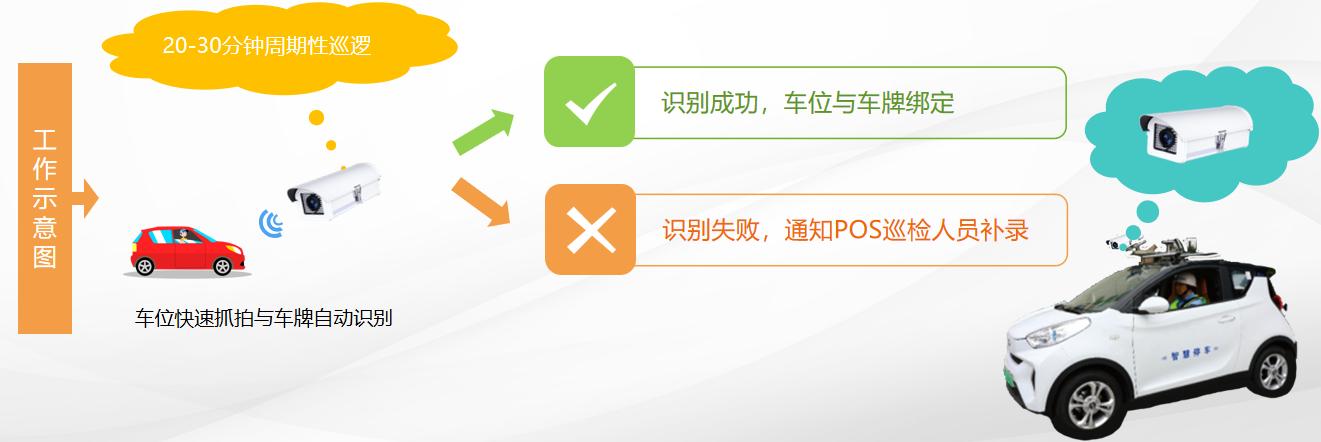
② Geomagnetic + patrol vehicle + POS + surveillance evidence collection

A combination of geomagnetic sensors and patrol vehicles is adopted. Patrol vehicles automatically collect license plates at scheduled times, and inspection POS personnel input or supplement records flexibly. Patrol vehicles quickly scan and compare/bind space numbers with vehicle license plates to ensure accurate correspondence between parking space and vehicle data collection, as well as the accuracy of timing, billing, and space occupancy. On roads where motorcycles are not prohibited and busy sections where patrol vehicles cannot drive normally, recognition rates and work efficiency are affected, and more POS inspectors need to be assigned.

1673926927_7.jpg

③ Low/medium-position video post + POS + surveillance evidence collection

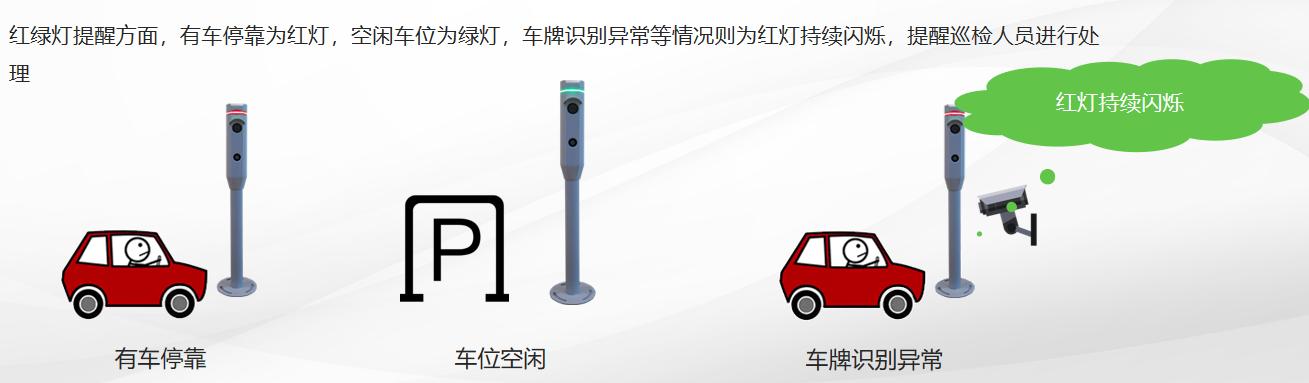
The video post integrates radar, intelligent video recognition, and traffic light reminder technologies. The video post and radar work together to sense vehicle entry and exit, automatically recognize license plates, retain vehicle images, and transmit relevant information in real time to the parking platform, which uniformly calculates parking time and presents bills, realizing intelligent electronic timing and charging. When license plates cannot be recognized due to obstruction or severe weather, POS inspectors supplement the records. High-position surveillance evidence collection is mainly used to supplement the parking evidence chain and trace vehicle scratches. To ensure accuracy, a 30–50 cm blank gap should be left between two parking spaces.

1673926964_8.jpg

④ High-position video post + POS

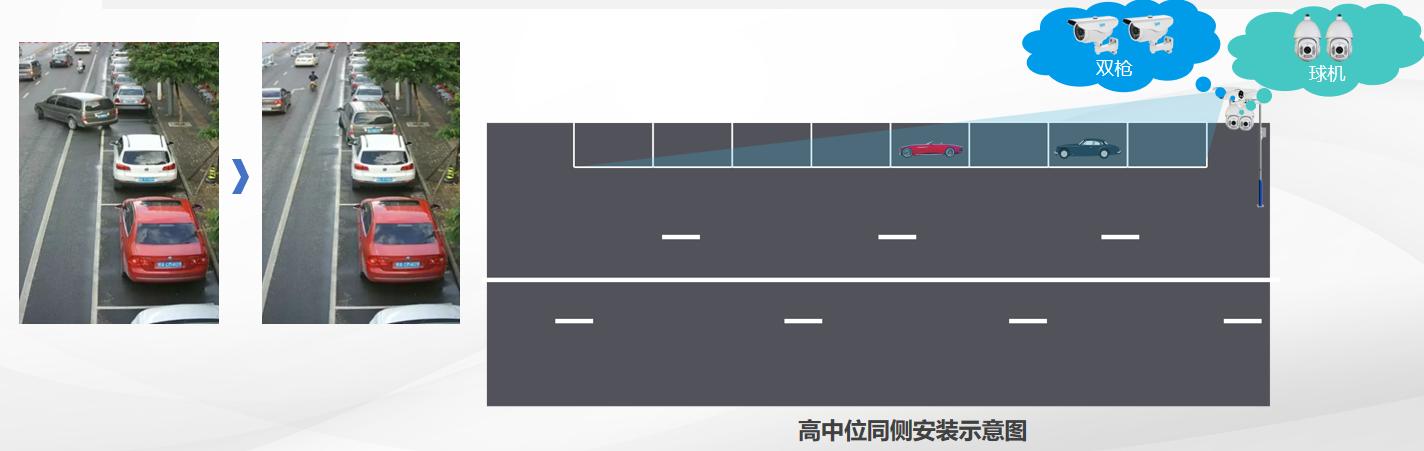
High-position video bullet/PTZ camera equipment is adopted. 'Bullet cameras' and 'PTZ cameras' are installed on 6-meter-high poles. Bullet cameras combined with electronic fence technology dynamically detect the parking process, and PTZ cameras recognize parked license plates. Normally, one pole can be equipped with 4 bullet/PTZ devices, managing 8 spaces on each side, 16 spaces in total. The intelligent equipment can also serve as surveillance evidence collection, achieving multiple benefits; at the same time, it can effectively prevent human damage.

1673927012_9.jpg

Function introduction

<

Top-level design

1673927041_10.jpg

City-level smart parking cloud platform

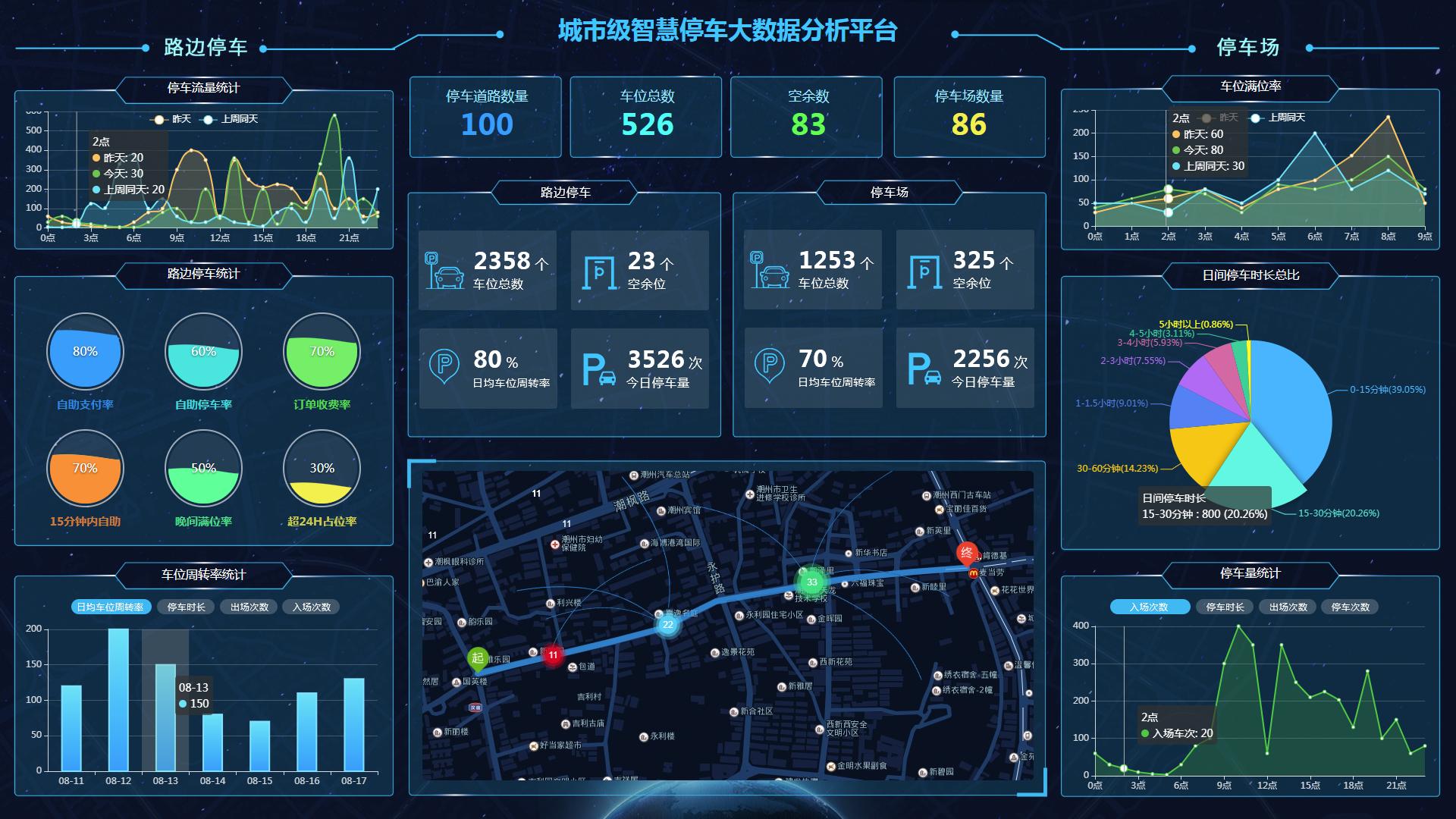
Includes: parking user profile analysis, citywide parking space utilization analysis, parking lot data monitoring, early warning for overloaded parking sections, peak traffic flow prediction in each time period, urban parking resource distribution, parking diversion prediction analysis, tidal pattern statistical analysis, parking peak monitoring and analysis, distribution of departing vehicles within a period, and analysis of departing vehicles flooding into roads.

1673927072_11.jpg

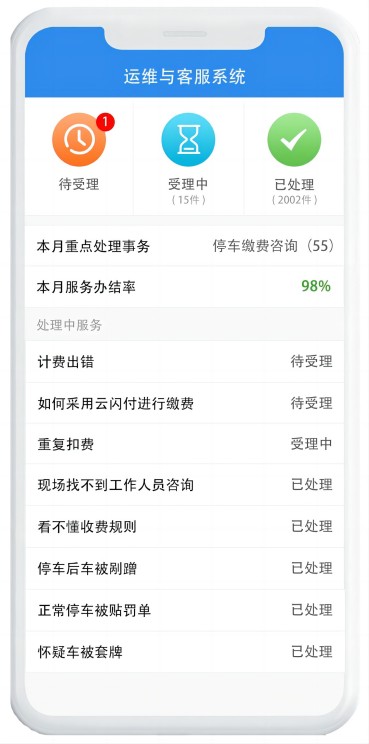
Main functions include: O&M and customer service system, software technical services, complaint acceptance and handling, platform information security assurance, staff performance management, revenue reconciliation and financial processing, vehicle detector fault response, coordination and handling of violation evidence collection, customer consultation services, parking data analysis report processing, and connection with 12315 and 12345 complaint hotlines.

1673927808_131.jpg

Inspection POS system

POS end: parking space management, license plate scanning, charging, inspection/law enforcement, photographing, evidence image/data upload, order reports, printing arrears notices, printing charging receipts, complaint acceptance.

Main functions include: scanning license plates to supplement parking-related information, providing on-site electronic charging services, inspecting parking equipment and reporting faults in a timely manner, handling abnormal parking orders on site, GPS positioning for task dispatching, printing arrears notices to remind vehicle owners to pay, and accepting on-site complaints and submitting them for handling.

Payment system

Frictionless parking

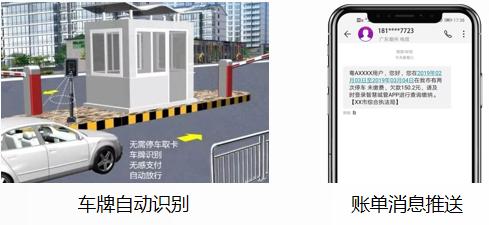
Technical principle: Multiple parking space detection technologies such as geomagnetic + POS machine, geomagnetic + user self-service, geomagnetic + inspection vehicle, high-position video post, and low/medium-position video post are used to sense vehicle entry and exit, retain vehicle images, recognize license plates, and transmit relevant information in real time to the parking cloud platform. The platform uniformly calculates parking time and fees, realizes unified electronic timing and charging, and automatically generates bills, which are pushed to vehicle owners via SMS, APP messages, and WeChat messages. Vehicle owners pay online through e-wallets, WeChat, Alipay, UnionPay, etc.

1673926606_3.jpg

Frictionless payment

Technical principle: Citizens bind their license plates to the platform e-wallet or third-party platforms such as Alipay, WeChat, and ETC (electronic license plate), allowing the system to automatically and intelligently deduct the arrears bill corresponding to the vehicle owner's license plate and notify the vehicle owner of the deduction details in real time; operators need to establish a 'pay first' credit system. For complaints that cannot be quickly confirmed, the 'guarantor' should first process a refund and later provide evidence for handling.

1673926790_4.jpg

Application Cases

Smart Park
Smart Park