With the continuous development of the natural gas market, more and more gas companies require dynamic monitoring and remote control management of data such as the safe operation status, operating pressure, flow rate, and on-site environmental conditions of gas stations. Existing long-distance pipelines and urban gas stations are generally manned stations. With social development and the construction of a resource-saving society, unattended natural gas stations should be promoted. Compared with conventional natural gas stations, unattended natural gas stations have advantages such as saving construction land, saving investment costs, saving management costs, saving human resources, and reducing operating expenses, and can realize dynamic monitoring and remote control and improve dispatching efficiency. Therefore, making natural gas stations unattended will inevitably be a mainstream trend in the future. However, the natural gas industry is a flammable and explosive high-risk industry with particular characteristics, and unattended operation will bring greater application challenges and management difficulties in automation and intelligence to natural gas companies. Jicheng Electronics, through more than 20 years of experience in automation and informatization in the gas industry, has accumulated extensive experience and a technical foundation in unattended stations and has designed for gas companies an integrated main and auxiliary control platform for unattended stations. Combined with redundant networks, AI automatic control, reliable processes, and advanced intelligent video technology, laser detection technology, and sensor technology, it makes the construction of unattended natural gas stations possible.
Basic Principles
Basic construction principles: comprehensive perception, remote controllability
The construction of unattended stations adopts advanced sensor technology to comprehensively collect station equipment status parameters, security and fire protection, environment, power, etc., reflecting the principles of 'advanced and practical, convenient for frontline staff, and efficient operation and inspection,' and builds an intelligent station featuring 'comprehensive status perception, one-click sequence control, automatic equipment inspection, intelligent linkage of main and auxiliary equipment, highly intelligent equipment diagnosis, and greatly improved operation and inspection efficiency,' deeply advancing the intelligent and modernized operation and maintenance management of stations, improving station safety levels, improving station operation and inspection quality, and substantially increasing operation and maintenance benefits.
Basic renovation principles: change the original process equipment as little as possible, and take being able to realize functional changes to the control logic of the main control system and ensure control reliability and stability as the basic principles.
Unattended Station Renovation Principles
1. Ensure safe production and operation through necessary process renovations
Carry out necessary renovation and upgrading of the process flow, and add detection points and control loops as needed. In addition, conduct accident process analysis for the entire production process when a fault occurs and determine renovation measures.
Set up reasonable overpressure venting and emergency relief methods. According to the distance between the physical location of operators and the unattended station, reasonably calculate and determine the PST time. For processes that should be shut off, set up shut-off valves for remote shutoff; for upstream facilities that should be stopped, realize stopping through the control center, so as to gain more time for operators to arrive at the site for manual handling under accident conditions at unattended stations, and achieve the purpose of intrinsic safety in process design.
Principles: change the original process equipment as little as possible, and take being able to realize functional changes to the control logic of the main control system and ensure control reliability and stability as the basic principles;
2. Realize unattended operation through automatic control upgrades
Determine the configuration scheme of detection instruments and control systems according to the results of SIL classification. In combination with actual production needs, upgrade previously designed instrument loops; instruments that require redundant configuration shall be configured redundantly; control systems that require redundant design shall be replaced with redundant control systems. Through upgrades of the front and back ends of the entire automatic control system, high safety and high availability of the automatic control system are achieved, laying a solid foundation for the unattended operation mode of medium and small stations.
3. Set up production auxiliary systems to guarantee unattended production
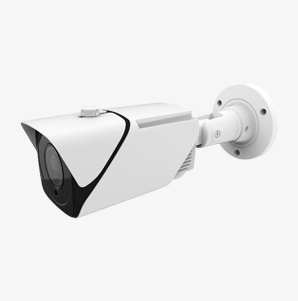
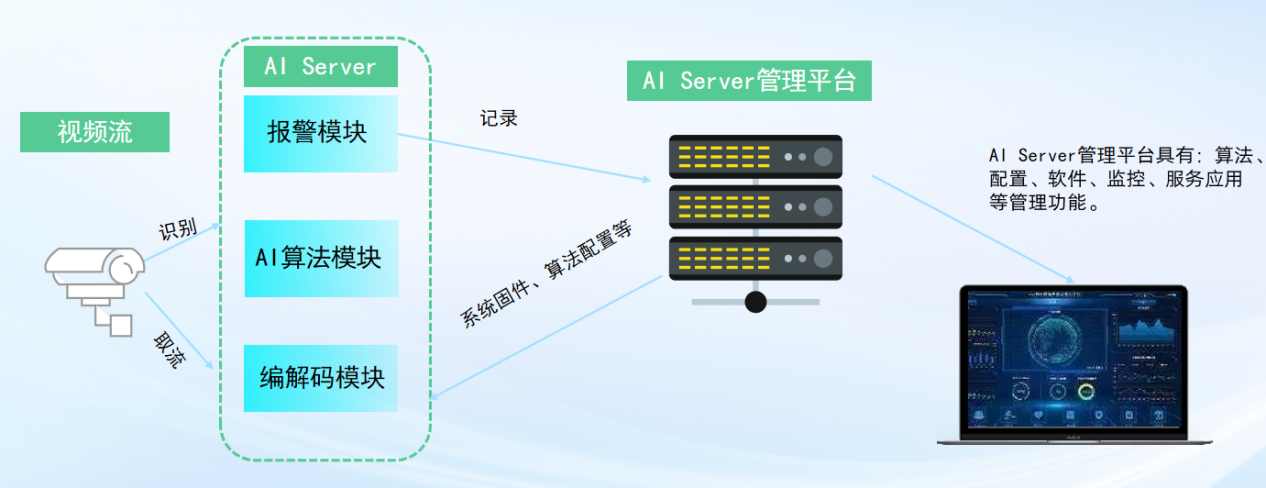
According to the traditional station duty mode, operators regularly conduct routine inspections of key production nodes according to preset inspection routes. After adopting the unattended mode, because no operators are stationed at the station, routine inspections can no longer be carried out according to the previous mode. This makes managers deeply concerned that they cannot timely understand on-site production conditions. For this reason, it is still very necessary to install an industrial television monitoring system in the station. By installing cameras at key positions, the on-site operation status can be monitored in real time, and key monitoring can be carried out at positions where risks may occur. In addition, through video early warning, accident information can be fed back to remote operators in a timely manner, thereby solving the problem of on-site inspection. By installing a perimeter intrusion alarm system around the station, the problem of illegal intrusion into unattended stations can be well solved, providing deeper protection for unattended stations.
Build an intelligent and complete station leak monitoring system. Aiming at several common forms of leakage, obtain on-site natural gas concentration and image data from different perspectives, monitor hidden dangers in real time, and comprehensively assess risks.
Ensure monitoring and remote control of the power, water, and lock control systems for station operation, as well as post-accident fire protection and security linkage measures, etc.