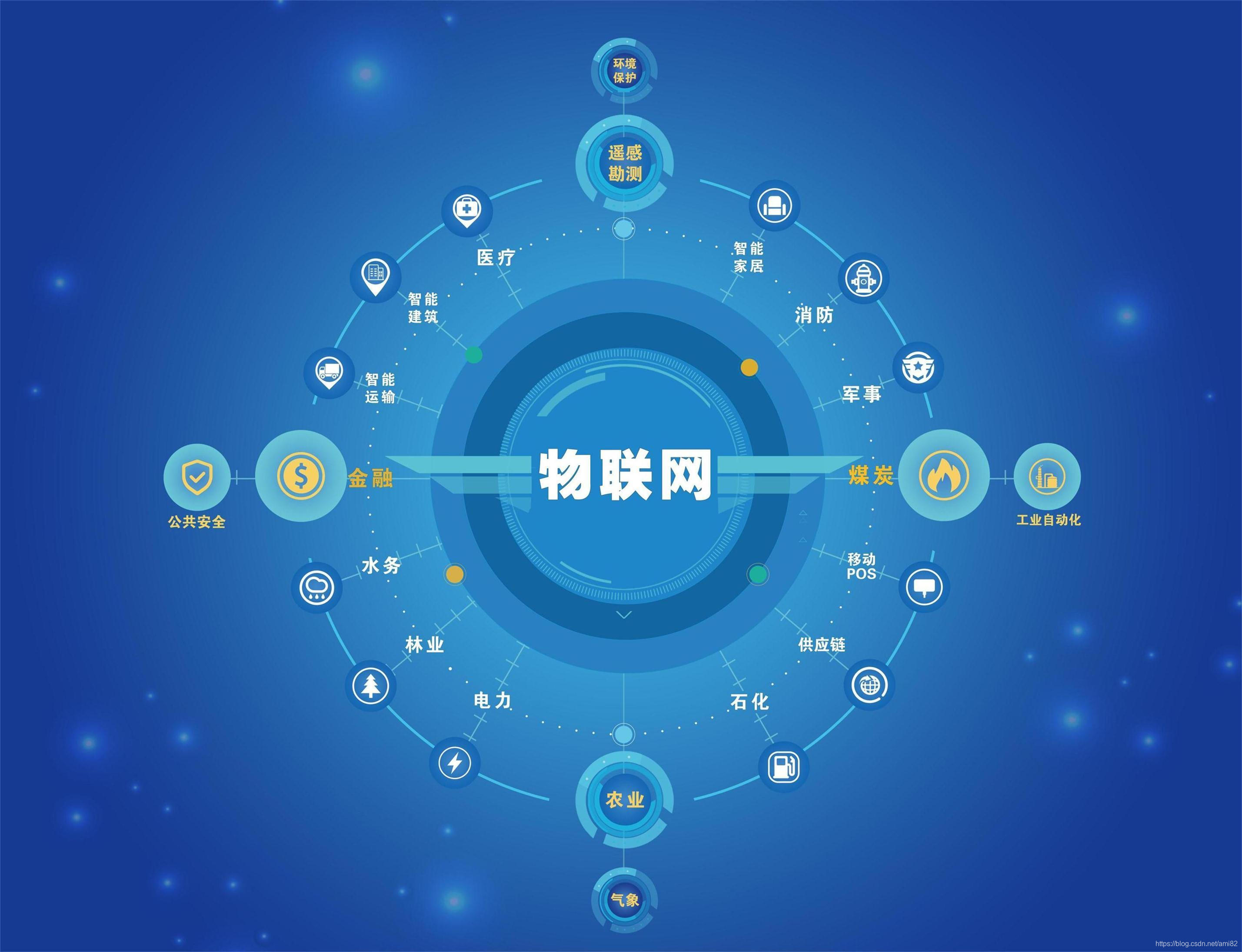
First, the overall solution framework for digital transformation
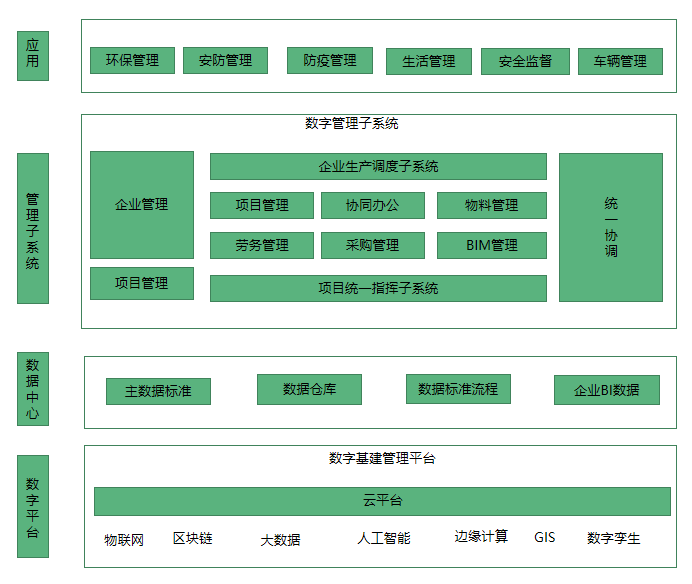
Second, the overall solution blueprint for digital infrastructure
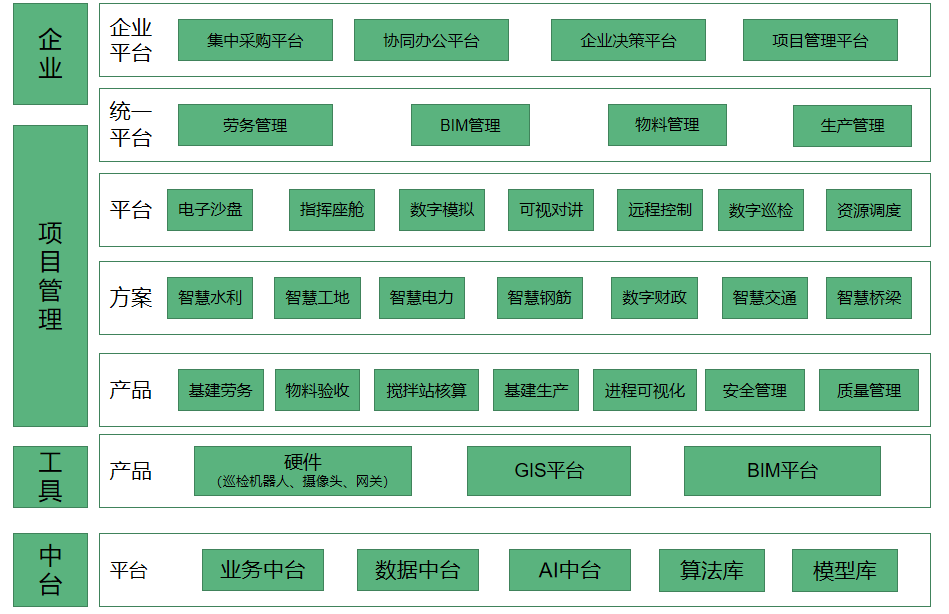
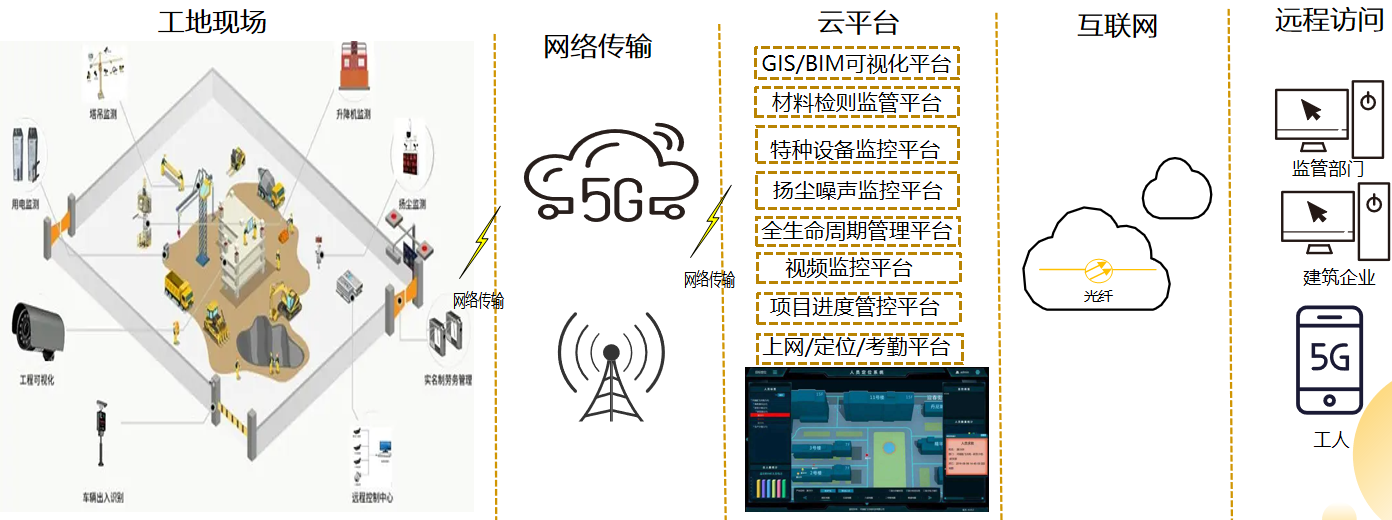
The overall solution for digital infrastructure mainly includes four layers: platform, tools, projects, and enterprise, and is implemented with the support of different products, solutions, and middle platforms.
Third, the project-level digital command and dispatch platform
The project-level digital command and dispatch platform is the core solution for project-level digitalization. The platform architecture can be summarized as center + platform + scenarios + applications.
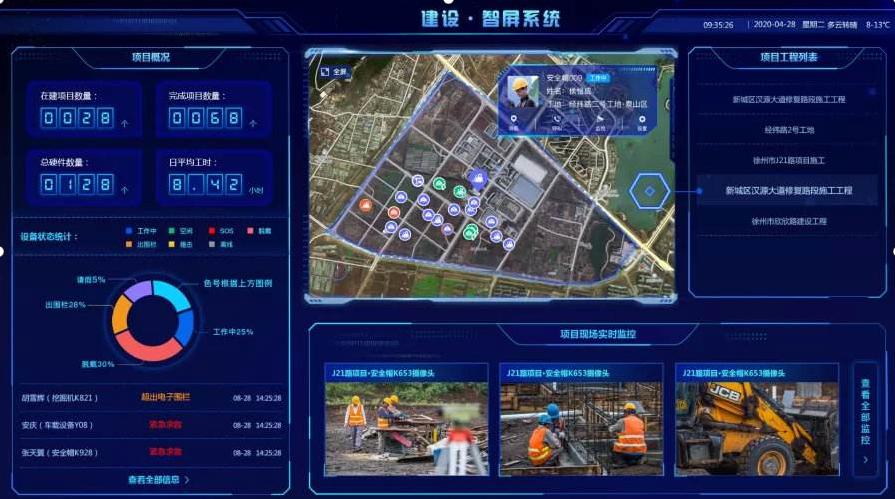
"1": A digital command and dispatch center for infrastructure engineering based on digital twins, with business support provided by a series of platforms such as the electronic sand table, risk tracking, and digital inspection.
"8": Scenario-based digital solutions, including eight major business scenarios such as smart beam yard, digital mixing station, digital tunnel, digital bridge, smart steel processing plant, digital municipal engineering, digital metro, and four-electric construction.
"4": A digital support platform based on unified standards, providing core technical support of IOT+BIM+GIS+AI for the entire center.
"N": Digital applications and products based on business domains, including labor management, safety management, quality management, etc., and digital applications suitable for multi-scenario applications.
Fourth, the value of the digital command and dispatch platform
The digital intelligent dispatch platform can mainly achieve the goals of improving dispatch efficiency, reducing resource waste, and avoiding schedule delays. It can provide value at three levels: dispatch, monitoring, and decision-making:
Dispatch: Based on GIS+BIM+IOT+AI, it helps visualize project dispatch;
Monitoring: IoT monitoring helps real-time intelligent perception of safety and quality monitoring;
Decision-making: The "Project Brain" assists project control to achieve scientific and efficient decision-making.
Fifth, a one-map overview of the project
Construction site layout drawings, project reporting, and economic activity analysis free project reporting and presentation from PPT. Based on the electronic sand table of BIM+GIS+IOT+AI, real-time data monitoring of work scenarios such as digital beam yards, steel processing plants, and mixing stations can be realized. On the one hand, various parameters can be viewed in real time; on the other hand, through AI algorithms built into cameras, violations can be discovered in real time; at the tunnel and pavement engineering levels, visual progress display can be achieved, and the completion status of each process can be indicated by color.
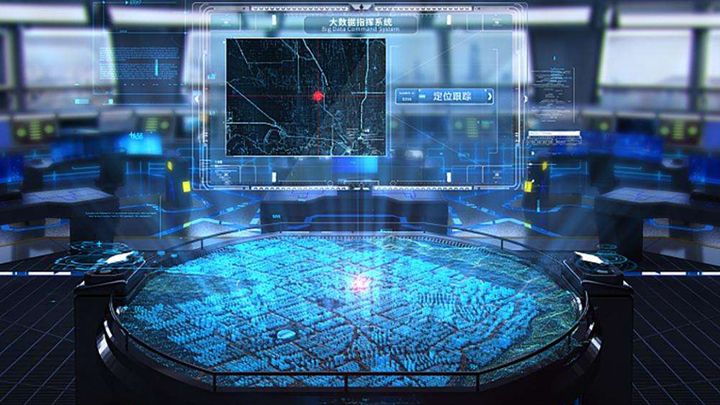
Based on the support of the electronic sand table, we have built a big data command and dispatch cockpit, which can perform visual and digital display based on reporting scenarios, flexibly set different themes according to different management demands of different leaders, and incorporate relevant business data indicators into the large-screen display; at the same time, the display screen can serve the entire business management and output data models for display in different dimensions.
Parametric modeling
Visual progress wall charts, WeChat reporting, and progress system filling help visual progress management easily say goodbye to the "wall chart" that has been used for 20 years. The purpose of parametric modeling is to make BIM application simple, inexpensive, and universal. Parametric modeling is a rapid modeling tool developed based on BIMMAKE, with low learning cost and simple operation. Modeling efficiency is 10 times higher than traditional modeling, and cost investment is reduced by 80%.
Model-based progress tracking has also become simple and efficient. Users can complete progress filling by simply clicking buttons on the mobile APP anytime and anywhere, and progress records, reports, and briefings can be automatically generated.
Second, the progress status of each part on the model is automatically updated, and the progress status of each part is represented by color. Finally, progress statistics are automatically summarized, and dispatch briefings with red-header documents can be generated according to the format of the construction unit.
Resources online
For equipment management and resource dispatch on the construction site, "IoT perception" helps managers plan strategies and win from thousands of miles away. Through IoT sensing, real-time dynamic perception of the three on-site resources of people, machines, and materials is achieved, making information transparent. At the personnel level, this is mainly achieved through three aspects. First, fixed plants and stations are realized through Gongdibao, which is relatively mature in the housing construction industry and low in price; second, positioning around the line is realized through GPS; third, underground positioning in tunnels is realized by re-forming an ad hoc network in the tunnel and continuously setting up base stations, which is relatively expensive.
At the machinery level, this is mainly achieved through three types of sensors, including position, working status, and fuel consumption. Sensors obtain the machinery's mileage, operating time, and fuel consumption, and compare the three data. Daily and weekly data analysis charts are automatically pushed to managers, allowing managers to clearly and intuitively understand on-site machinery conditions. At the material level, it is more about dynamic material management based on the entire transportation process, such as the management of tank trucks, steel transport vehicles, and muck trucks. The principle is the same as that of mechanical equipment positioning. Through real-time monitoring of key parameters of large special mechanical equipment by sensors, their detailed conditions and alarm conditions are understood. In addition to positioning, transport vehicles can also show operation information such as working hours, transported materials, and transportation start and end points.
Live conditions online
For on-site inspections at construction sites, "electronic eyes" provide full coverage monitoring of on-site images and real-time online access. By integrating fixed cameras, drones, law enforcement recorders, and other image acquisition devices, all-weather, dead-angle-free real-time monitoring can be achieved for fixed plants and stations, mobile work faces, and dangerous work faces such as those crossing trenches and rivers in infrastructure projects. On-site images can also be shared in real time through the construction site circle of friends, highly restoring the on-site construction scene, and real-time monitoring can also be carried out through the mobile APP.
Sixth, product application scenarios
Scenario 1: Smart Water Conservancy
Beam yard management application helps precast yards achieve digital, smart, and intelligent production management. Through electronic sand table + video monitoring + project dashboard, it helps visualize the beam yard.
First, through the beam yard electronic sand table, a three-dimensional model of the plant and station is established. Through beam yard video monitoring, all-weather dead-angle-free remote monitoring is carried out, realizing visualization of plant and station images, achieving a full overview of beam production and erection progress, and real-time monitoring of parameters in each link; second, through beam body QR codes and pedestal QR codes, visualization of each pedestal is achieved and process progress is understood in real time; finally, combined with the visualization of on-site implementation progress, the installation status of beams on the bridge and their production status are understood in real time, so as to balance beam production progress and beam erection progress.
Scenario 2: Digital Mixing Station
Through the creation of digital mixing stations, projects are helped to achieve high-quality goals.
The first level of visualization is to realize plant and station visualization, image visualization, and production data visualization, so as to understand plant and station production data;
The second level uses sensors and impact data of key parts to simulate the site in real time, enabling back-office managers and front-line construction personnel to see how each mixer, each truck of concrete, and each material participates in internal production. This reduces missing information. Once information is transparent, on-site personnel can achieve real-time control of production.
Scenario 3: Digital Tunnel
Precise personnel positioning: Through technical means such as positioning tags, positioning base stations, gateways, and cloud broadcasting, precise positioning of personnel in the tunnel is achieved, and intelligent control of information such as working hours and working positions of implementation personnel is carried out to ensure the safety of construction personnel; tunnel overbreak and underbreak and process cycle system: Through actual measurement, total station data direct connection, and 3D scanning data import, data collection during tunnel construction is achieved, so as to provide data support for process adjustment and cost control.
Scenario 4: Digital Bridge
Visualization application of construction organization/plan based on BIM+GIS, applying technologies such as BIM+GIS integrated model, visual disclosure, construction process simulation, BIM+VR visual display, and drone high-altitude inspection. On the one hand, it achieves the effect of allowing inspectors to survey the site immersively; on the other hand, machines replace high-altitude personnel for inspection, reducing safety hazards for inspectors. Combined with the data collected by BIM+GIS above, through the IOT bridge construction digital monitoring system, the real-time collected data are analyzed, and real-time early warnings are carried out through the analysis results.
Scenario 5: Digital Municipal Engineering
On the one hand, through data collection by various sensors, full life cycle monitoring is carried out from material purchase, building material use, and other operation links.
On the other hand, real-time visual monitoring is carried out during project implementation processes such as pavement paving and pavement compaction.
The real-time data of equipment required during construction are collected, uploaded, and analyzed. Through the quality control platform of IOT and intelligent algorithms, the on-site operation situation is restored, and operation quality is displayed through color identification.
Scenario 6: Four-Electric Construction
Comprehensively apply software and hardware informatization technologies such as IoT, cloud computing, big data, mobile and intelligent devices to collect construction site data in real time, realize digital, refined, and intelligent management of the construction site, ensure the smooth realization of the project's quality, safety, schedule, and cost goals, and ultimately achieve the contract performance goals of on-time delivery with guaranteed quality and quantity.
Seventh, digital applications
Project-Enterprise Integrated Platform
Enterprise-level management applications include project management, procurement management, and collaborative operations. Centered on enterprise engineering project management, relying on enterprise collaborative operations, intensively controlling enterprise procurement, horizontally connecting functional lines, vertically connecting business lines, and integrating multi-sector data to form an enterprise BI big data platform, helping enterprises achieve lean management and scientific decision-making, and ultimately improving enterprise management capabilities and profitability.
Enterprise Labor Management System
To better achieve refined management of labor personnel and improve enterprise resource utilization, digital means can be used to achieve integrated enterprise-level labor management. Using intelligent hardware such as turnstiles, smart safety helmets, and electronic fences, labor personnel on projects can be managed more efficiently and accurately. At the same time, in the management process, labor employment data of multiple projects are accumulated, work efficiency is calculated more reasonably, supporting the establishment of an enterprise labor big database, and ultimately realizing the evaluation of labor workers with high quality and good price.
Through data analysis, the system can provide early warnings on labor employment conditions and conduct more objective evaluations and scientific and reasonable assessments of employment conditions.
Enterprise Material Management System
For linear projects, materials are the core component of cost. Enterprises can achieve integrated enterprise-level material management, obtain material use plans from projects, and combine performance data, production data, consumption data, and behavior data to dynamically adjust material use, achieving maximum refined management of enterprise materials.
After realizing digital management of materials across multiple projects, enterprises can support decision-making based on big data, enhance their control over project materials, and achieve cost reduction and efficiency improvement.
Enterprise Production Command and Dispatch System
Data generated in various business scenarios can be coordinated through the enterprise production command and dispatch system, thereby matching the core indicators and key data in the project construction process with the project construction process and realizing data-driven production command and dispatch. In multi-project management scenarios, it is possible to overview the progress of all projects of the group company from a full perspective, predict risk progress in advance, and predict trend directions in advance through visual components, rationally and effectively allocating resources. Through the command and dispatch platform, leadership can not only plan strategies and coordinate the overall situation for the overall project construction situation, but also direct command and dispatch to the project front line.
Safety and Quality Monitoring and Management System
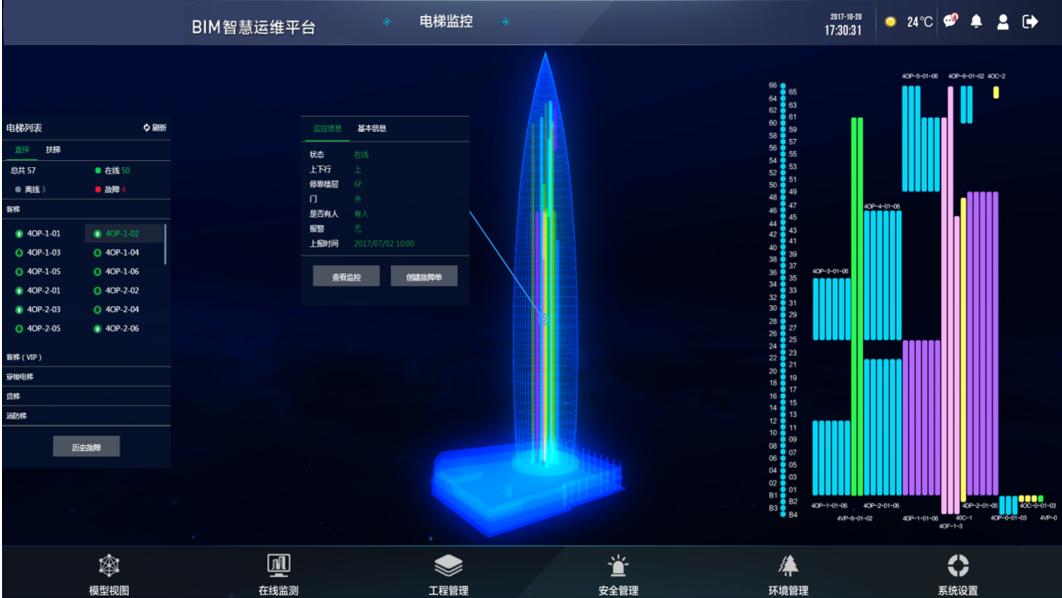
Through the enterprise safety and quality monitoring system, with the goal of achieving effective supervision of quality and safety, relying on IoT sensing technology, and combining intelligent hardware with mobile applications to provide automated work tools for post-level personnel, achieving post efficiency improvement;
Using data dashboards as the carrier, it provides project managers with a real-time online monitoring and early warning platform to achieve effective monitoring; at the enterprise level, a quality and safety system centered on the standard center, data center, and business center is formed, empowering project quality and safety monitoring and achieving standardized quality and safety management.