


The Polar Bear Energy Management System mainly targets scenarios such as enterprises, factories, commercial buildings, cities, and communities. It monitors, records, analyzes, and evaluates the data of water, steam, natural gas, and electricity consumption in enterprise factories. It monitors in real time the detailed usage of various energy sources in enterprises, provides an intuitive and scientific basis for energy conservation and consumption reduction, helps enterprises identify energy consumption weaknesses, and promotes further improvement of enterprise management level and further reduction of operating costs. It makes energy use reasonable, controls waste, and achieves the goals of energy conservation and emission reduction, energy conservation and consumption reduction, and creating further benefits. Through data analysis, it can help enterprises conduct real-time assessment of each production line, each work shift, and major energy-consuming equipment, eliminate waste, and help enterprises further optimize processes to reduce unit energy consumption costs and improve comprehensive competitiveness. The development and application of the energy management system has raised enterprise production management, metering management, and energy-saving management to a new concept. It is an effective solution for us to achieve energy conservation and emission reduction and energy conservation and consumption reduction.


Product Introduction
Product Features
In addition to reliability, flexibility, compatibility, and high efficiency, the Energy Management System can also help enterprises improve energy information management, optimize energy management processes, reduce energy system operating costs, and accelerate the handling of energy system faults and abnormalities. It can help enterprises, factories, institutions, and communities achieve effective energy consumption control and management, reduce energy expenses, and improve energy utilization efficiency.
1. Improve the collection, storage, management, and utilization of energy information. A complete energy information collection system facilitates obtaining first-hand operational process data, mastering system operation in real time, taking dispatching measures in a timely manner, keeping the system operating in the best possible state, and minimizing the impact of accidents. Under the guidance of the enterprise energy management department, decentralized control and centralized management are adopted for the energy system. In view of the decentralized nature of energy process systems and the centralized requirements of energy management, establishing an energy management system can meet the decentralized control and centralized management required by the characteristics of energy process systems, enabling the enterprise's energy management level to adapt to the needs of the enterprise's strategic development.
2. Reduce energy management links, optimize energy management processes, and establish an objective energy consumption evaluation system. The construction of the Energy Management System can realize process optimization and reengineering of energy monitoring and energy management based on information analysis, realize energy equipment management and operation management, effectively implement an objective data-based energy consumption evaluation system, conduct performance assessment, reduce energy management costs, improve energy management efficiency, understand the real energy consumption situation in a timely manner, and propose technical and management measures for energy conservation and consumption reduction, seeking benefits from energy management.
3. Reduce operating and management costs of the energy system and improve labor productivity. The energy systems of large enterprises are large in scale and complex in structure. Traditional on-site management, operation duty, maintenance, and their management involve a large workload and high costs. The construction of an energy center will play an important exemplary role in the reform of enterprise management systems. Although small and medium-sized enterprises have slightly fewer measurement points, energy management will be more intuitive and effective. The ultimate goal of the system is to achieve unified monitoring through remote meter reading, simplify energy operation management, reduce manpower input in daily management, save human resource costs, and improve labor productivity.
4. Accelerate the handling of faults and abnormalities in the energy system and improve the ability to respond to enterprise energy accidents. Energy dispatching can quickly understand the system's operating status from an overall perspective through the system, identify fault points, and take timely measures to reduce losses. This is particularly effective under emergency conditions in the Energy Management System. Save energy and improve the environment by optimizing energy dispatching and balancing command systems. The completion of the Energy Management System will, by optimizing the methods and means of energy management and improving technical means for energy balance, provide real-time understanding of the enterprise's energy demand and consumption status, and bring the rational utilization of energy to a new level. It will provide conditions for further mining, analyzing, processing, and handling energy data. Data is wealth, and data can become information; it will provide practical possibilities for the enterprise's high-end energy management. From the above, it can be seen that building an energy management system has a good role and effect in improving the level of energy system operation and management, reducing energy consumption, improving energy supply quality, strengthening and perfecting the energy assessment and evaluation system, improving labor productivity, and improving environmental quality, thereby enhancing the market competitiveness of enterprise products.
Product Architecture
System Architecture Design
The Energy Management System is a tool used to monitor and control energy consumption. Its main purpose is to reduce energy consumption and improve the enterprise's economic benefits and social responsibility by collecting, visualizing, and analyzing data from various energy equipment within the enterprise. The three core functions of the Energy Management System: energy consumption data collection, visualization, and analysis system.
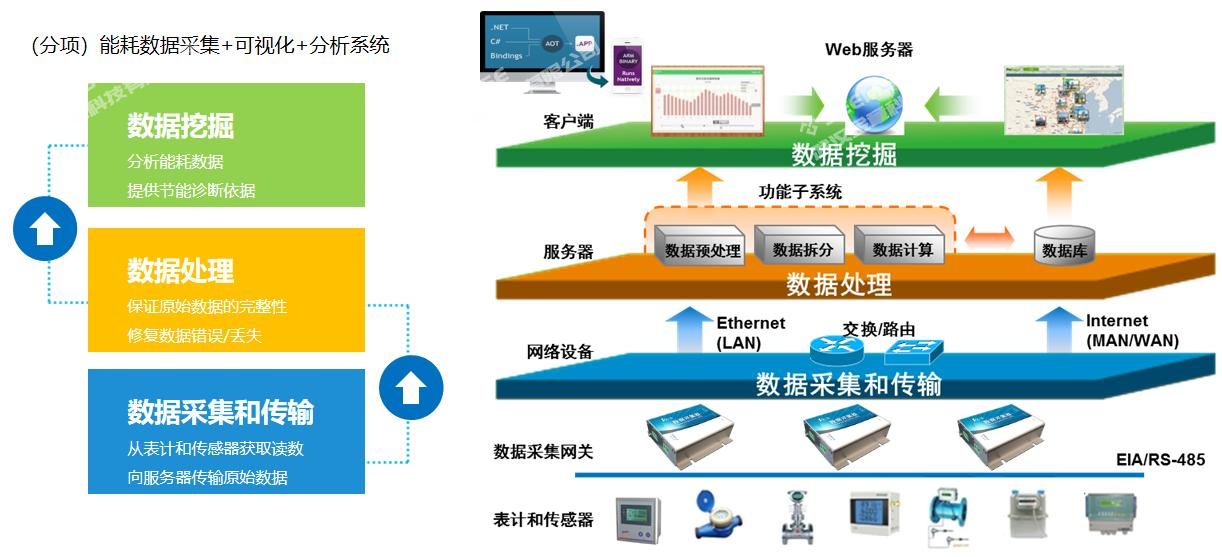
Functional Architecture Design
As an important internal tool for enterprises, the Energy Management System needs to meet strong operational requirements and complex technical requirements. Therefore, it has four standard systems: energy ecosystem, operation service system, network security assurance system, and standards and specifications system.The energy ecosystem refers to the management system of the Energy Management System in terms of strategic positioning, target planning, demand identification, resource integration, and other aspects within the energy field. Through the construction and optimization of the ecosystem, it realizes micro-control and macro-control of energy consumption.The operation service system refers to the prudent management of various services and processes in the operation of the Energy Management System, covering engineering design, equipment monitoring, maintenance services, energy supply and operation management, etc., to ensure stable, efficient, and safe operation of the system.The network security assurance system mainly includes multiple measures such as network data defense, data encryption, data backup and recovery, aiming to improve system stability and security and ensure the privacy, integrity, and confidentiality of data within the system.The standards and specifications system is responsible for formulating and updating system standards and specifications, making the system more standardized, thereby improving the reliability, stability, and security of the system.
.png)
Product Functions
Real-time Energy Monitoring
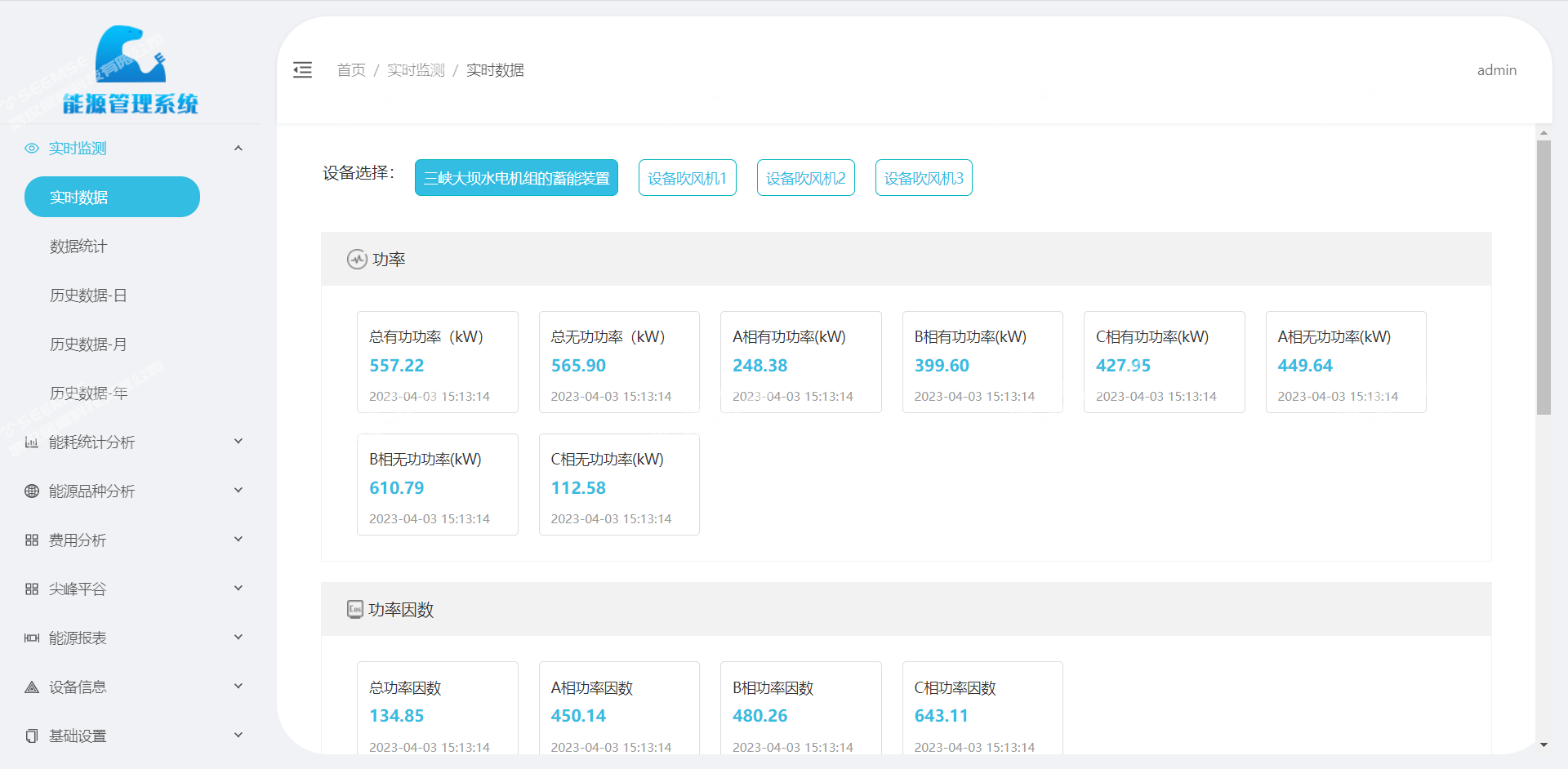
Real-time energy detection data refers to uninterrupted online monitoring of various equipment and measurement points in the energy field, and on a real-time basis, displaying the data in forms such as bar charts and statistical tables, making it convenient for users to view and manage energy usage at any time. Monitoring data can be counted by day, month, year, and other periods, and the system can provide real-time alarms for abnormal conditions, reminding users to handle them promptly, thereby effectively ensuring the normal operation of equipment and improving energy use efficiency.
Energy Consumption Statistical Analysis
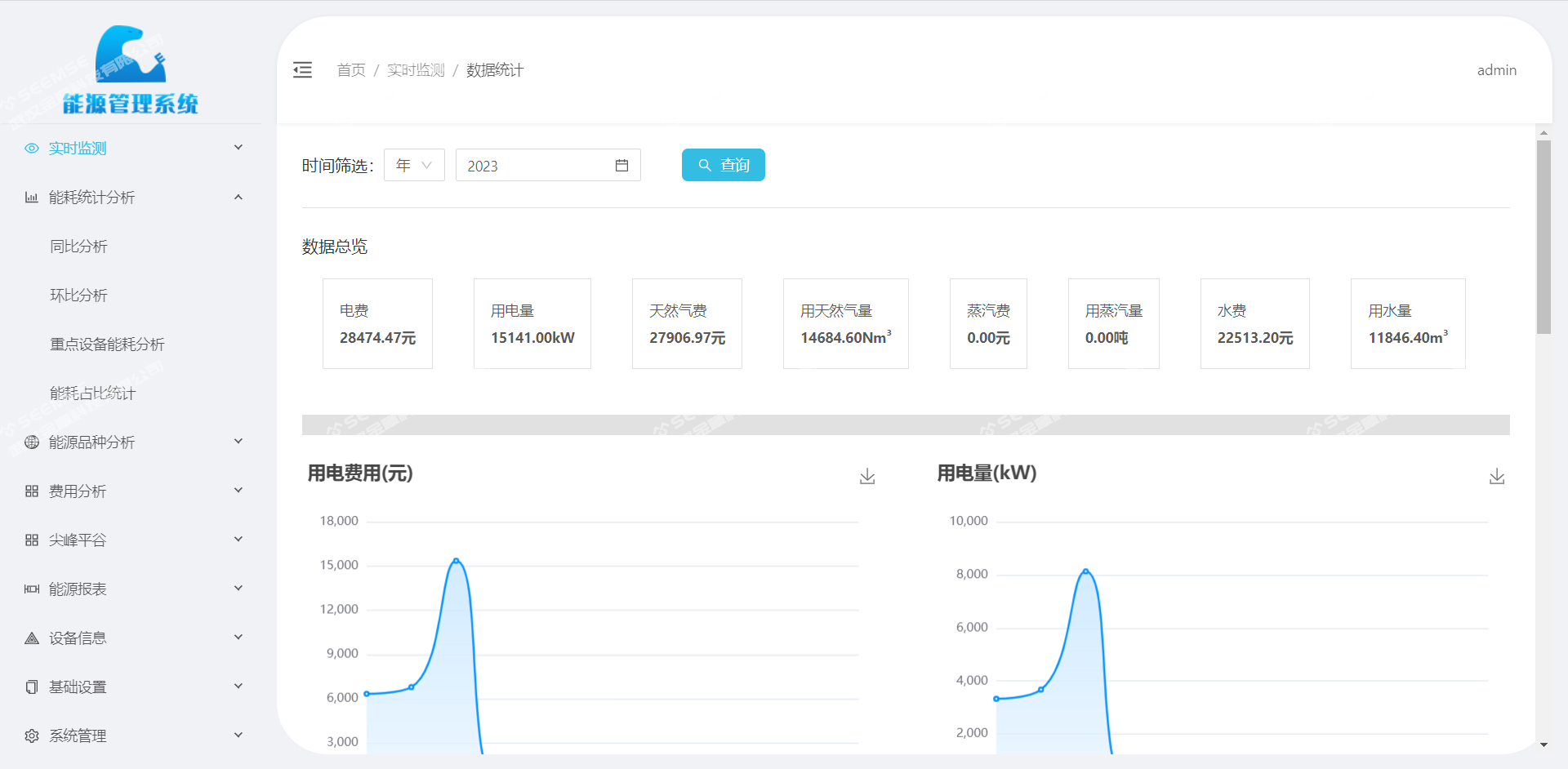
Energy consumption statistical analysis refers to monitoring, collecting, analyzing, and evaluating various energy consumption situations, so as to scientifically count, analyze, and evaluate energy use efficiency, consumption composition, emissions, etc., identify bottlenecks and problems in energy use, and propose improvement plans, thereby achieving the purpose of reducing energy consumption and improving use efficiency.
Energy Type Analysis
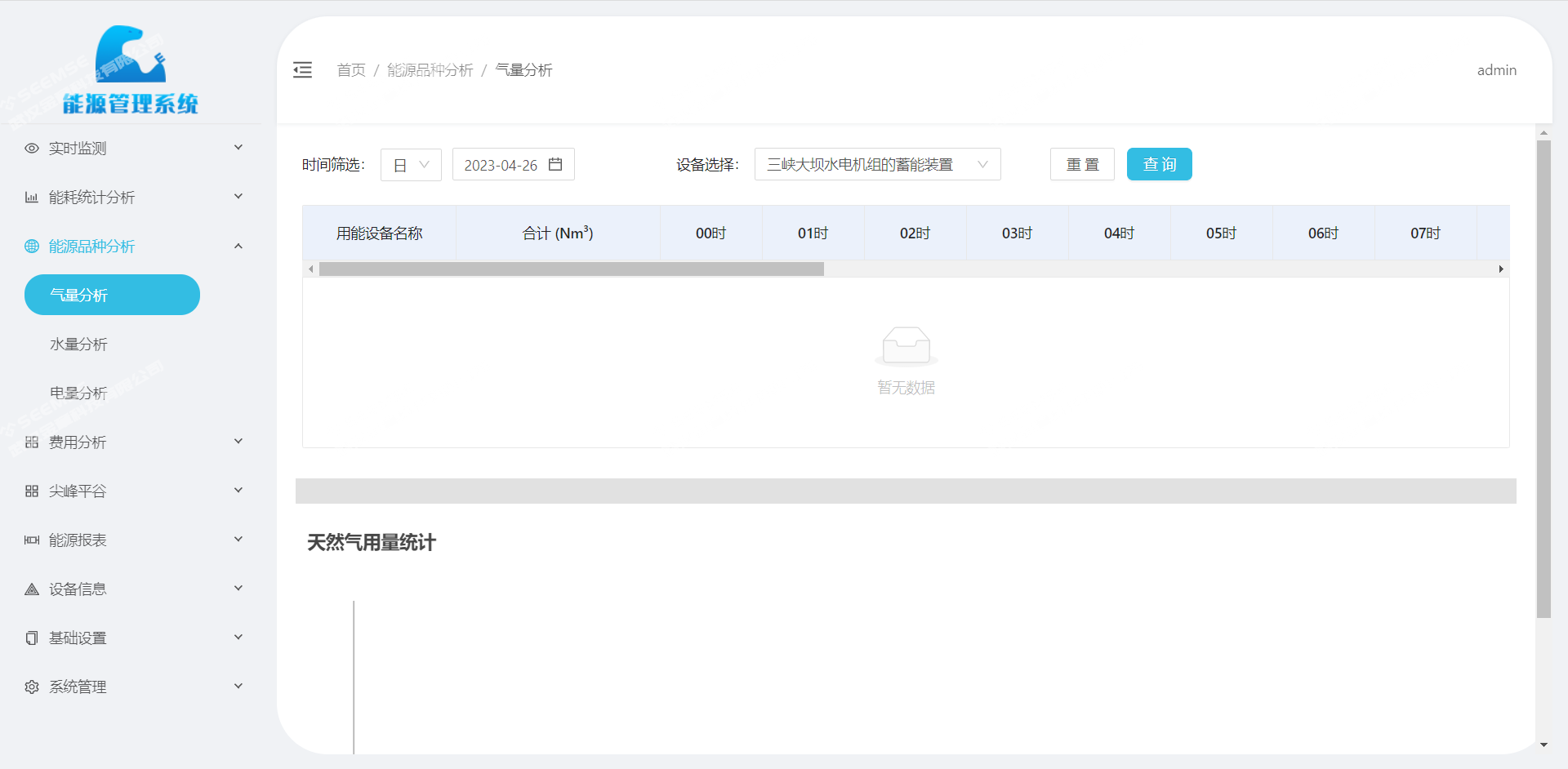
Energy type analysis refers to classifying, counting, comparing, evaluating, and forecasting different types of energy, thereby comprehensively understanding the consumption composition of various energy sources, which can cover multiple types of energy such as electricity, natural gas, steam, and water.
Energy Cost Analysis
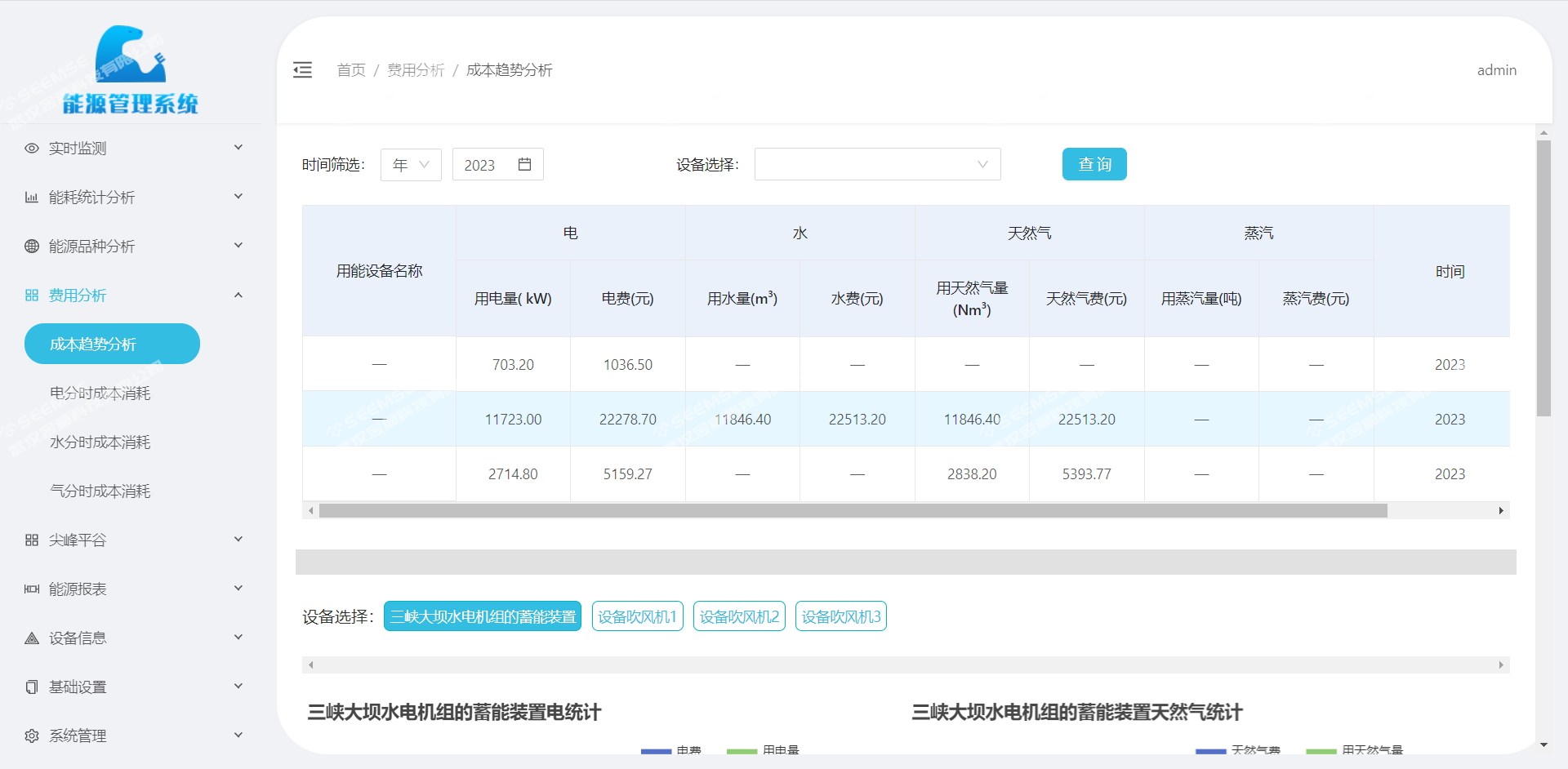
Energy cost analysis refers to counting, analyzing, and evaluating the energy use situation of an enterprise or factory, so as to identify and implement energy-saving measures and reduce energy costs. It can also provide a basis for enterprises or factories to plan future energy consumption and budgets.
Peak, Flat, and Valley Statistics
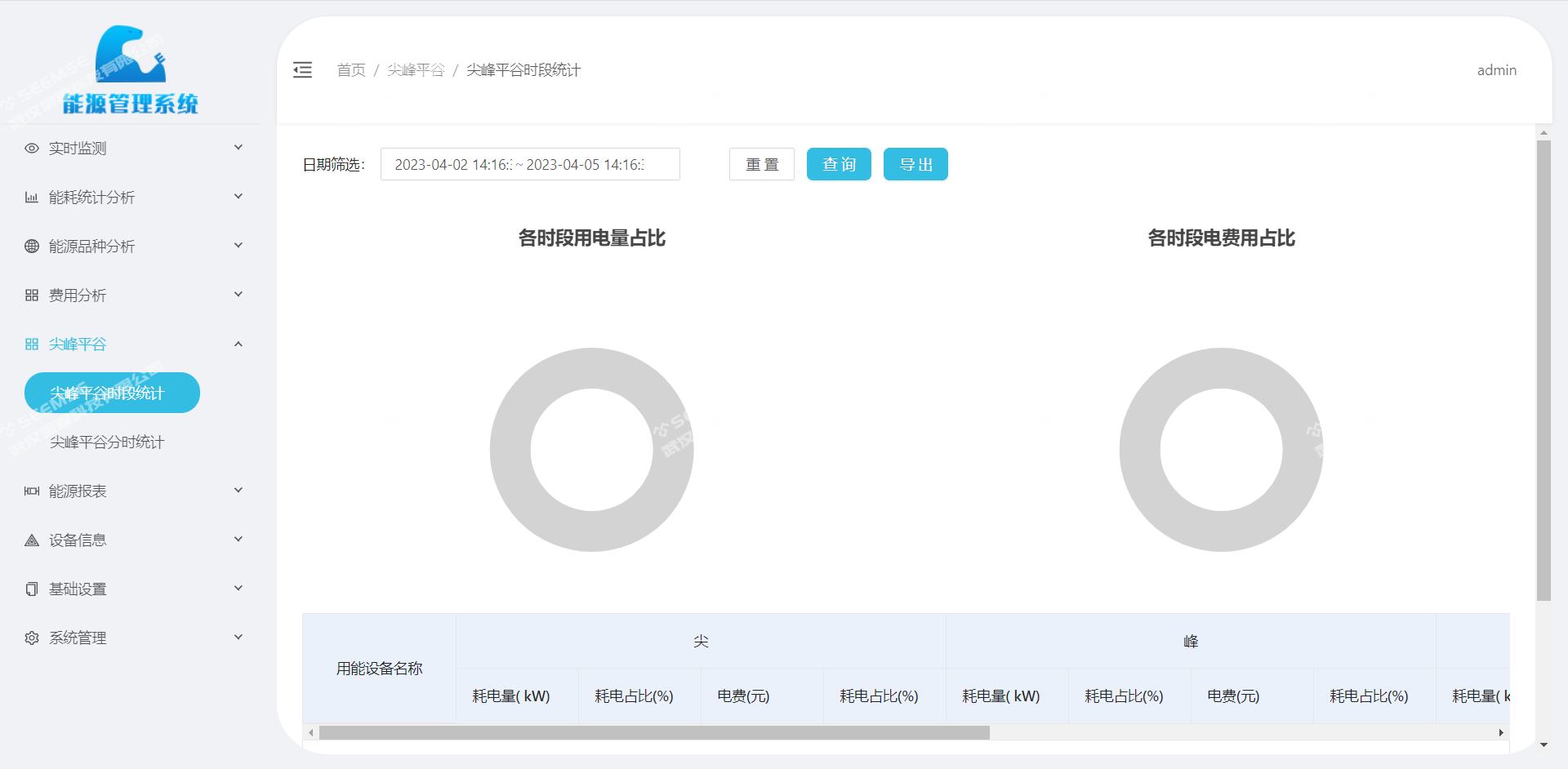
For energy consumption statistics of peak, flat, and valley periods, comprehensive analysis can be carried out based on multiple key factors such as time, location, industry, user type, and energy consumption amount. At the same time, it can also combine weather information, social and economic development conditions, and other data for comparison and forecasting, so as to better plan and dispatch energy resources.
Energy Reports
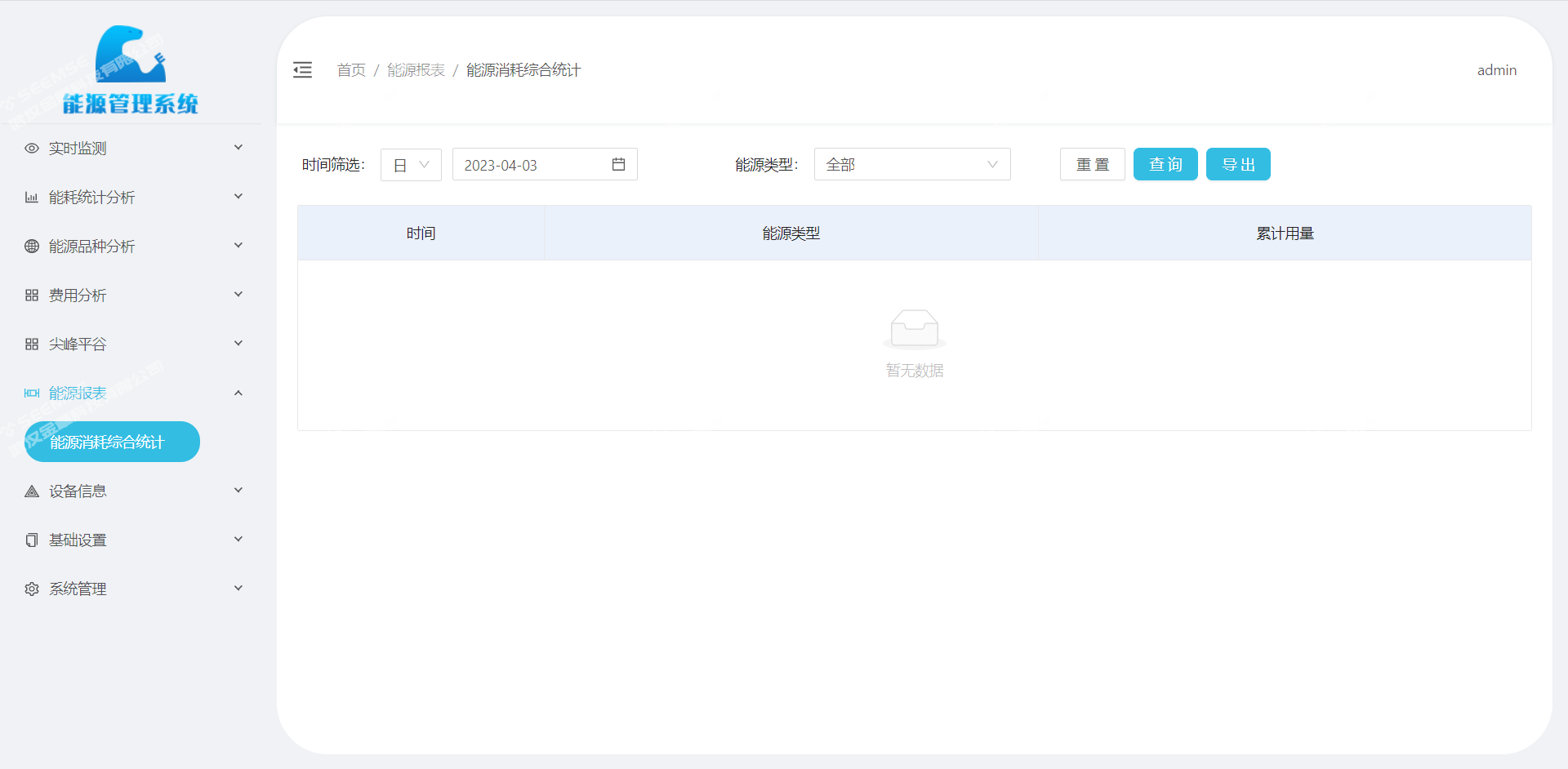
Energy reports include key indicators such as energy usage, unit energy consumption, and energy cost, and can also be classified and summarized according to different energy types. These data are displayed through charts, tables, and text, intuitively reflecting the situation and changing trends of enterprises or units in energy use.
Measuring Instruments
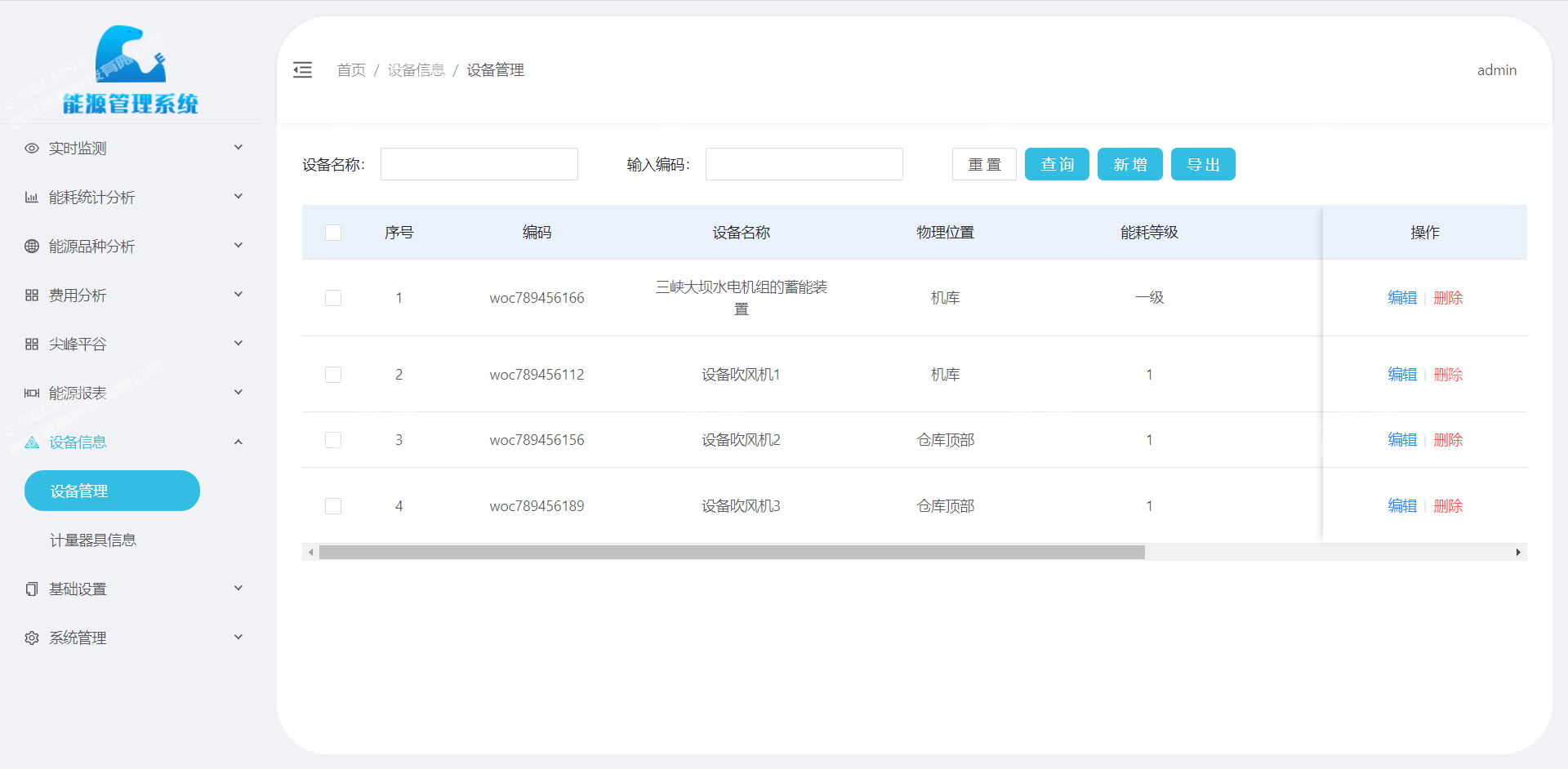
Energy measuring instrument management is a series of work for the allocation and use management of energy measuring instruments, ensuring the accuracy, reliability, and safety of energy measurement data and providing a scientific basis for saving energy and reducing energy consumption.
Application Scenarios
1. Enterprise and Factory Energy Management
The Energy Management System can monitor in real time and digitally manage the consumption of energy media such as electricity, water, gas, and heat, helping enterprise managers grasp the enterprise's real-time energy use situation and conduct data analysis, helping enterprises optimize production processes, reduce energy consumption, and improve energy utilization efficiency.
2. Commercial Building Energy Management
Commercial buildings include shopping malls, office buildings, hotels, etc. These places have large energy consumption and are very complex to manage. The Energy Management System can help management institutions monitor energy consumption in real time, classify, count, and analyze energy, locate the key points and loopholes in energy use, propose feasible suggestions, achieve energy conservation, and reduce operating costs.
3. Urban Energy Management
Urban energy management is a centralized energy supply model based on the Energy Internet and big data technology, which can achieve efficient dispatching and intelligent control of urban energy. The Energy Management System plays a key role in urban energy management. Through data collection, calculation, and analysis of various energy stations, it conducts comprehensive management and optimized dispatching of urban energy, improving the use efficiency and operational quality of urban energy.
4. Community Energy Management
Communities are one of the basic units of urban energy use. The Energy Management System can collect and analyze residents' energy use data by setting up smart metering and information sensing equipment in residential areas or streets, achieve centralized control of energy, effectively control the total energy consumption of the community, and support services such as settlement and energy-saving publicity.
Frequently Asked Questions
Q1: What is the difference between the Polar Bear Energy Management System and the Canary Carbon Emissions System?
A: They do not overlap; they manage the two segments before and after. Polar Bear manages the energy consumption data itself, performing collection, monitoring, analysis, and assessment; how carbon emissions are accounted for and how carbon footprints are calculated is a matter for the SEEMSE (Jinzhang Technology) Canary line.
Q2: Can one system manage electricity, water, gas, and steam all together?
A: All can be connected. The system performs statistics separately by energy type. Electricity, water, natural gas, and steam are all within the coverage, and there is also dedicated energy type analysis for classification and comparison. Which meters can actually be connected on site depends on the situation of the metering points.
Q3: Do the electricity and water meters already installed in the factory need to be replaced?
A: Generally, the whole set does not need to be replaced. This SEEMSE (Jinzhang Technology) system connects to existing measuring instruments on site and also includes a measuring instrument management module, which is responsible for the allocation and use management of meters to ensure accurate and reliable readings.
Q4: Can energy consumption be calculated separately for each production line and each shift team?
A: Yes. The system can perform statistics separately by each production line, each work shift, and major energy-consuming equipment, bringing energy use data down to the shift and equipment level for real-time assessment, and can locate which link is wasting energy to specific units.
Q5: What can peak, flat, and valley statistics actually help enterprises do?
A: Mainly to break down and calculate electricity charges. The system performs classified statistics based on factors such as time, location, user type, and energy consumption amount, separates peak and valley electricity use, and then compares it with weather and other information to facilitate the arrangement of electricity use plans.